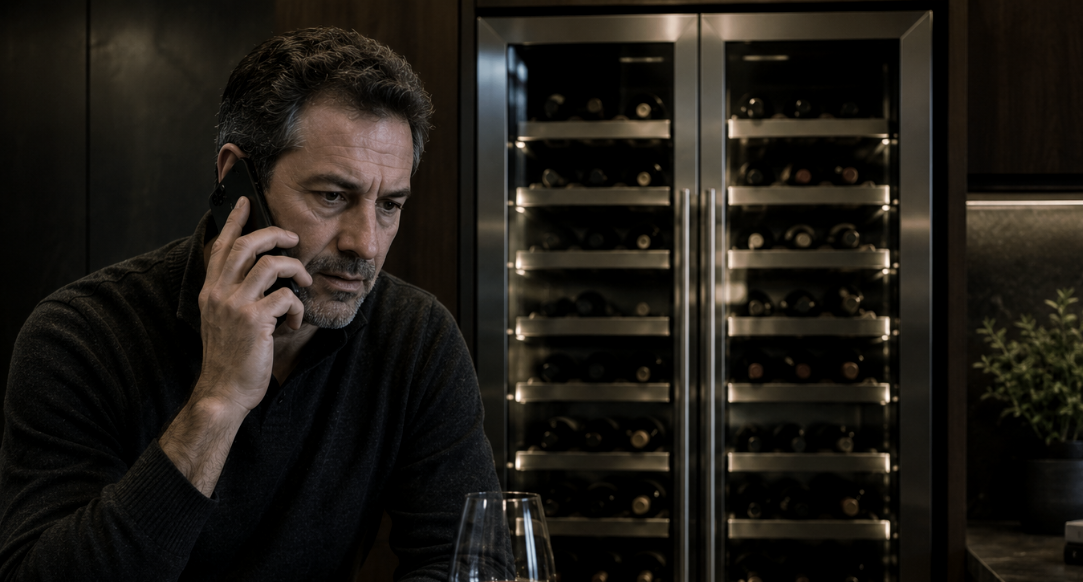
The wine fridge is sitting right there, half empty — and the kitchen fridge is packed. So can beer go in it? Cheese? Milk for the morning?
Short answer: for some things it’s a great fridge, for groceries it’s a health hazard. The line between the two is exact, and it’s worth knowing before something spoils — or before the cooler itself pays for the experiment.
Cooler already misbehaving after double duty? Call 786-377-9387 or book a same-day visit.
First, make sure this is your problem
- The fridge can’t hold temperature for anything → see running but not cold enough.
- You’re after the right numbers for wine itself → that’s the storage temperature guide.
- You want to know what else can safely live in a wine fridge → you’re in the right place.
Quick answer: what you want to store → the verdict
| Item | Verdict | Why |
|---|---|---|
| Beer | Yes | Ales and lagers store happily at wine-fridge temperatures |
| Soda, sparkling water | Yes | No safety issue — just cooler than cellar-cold won’t happen |
| Hard, rinded cheeses | Short-term | Tolerate 40–50°F; soft cheeses don’t |
| Chocolate | Yes | 55°F is close to ideal — better than the kitchen fridge |
| Some produce (pears, herbs, greens) | Yes | Many fruits and vegetables prefer these temperatures |
| Milk and dairy | No | Food safety needs below 37°F — a wine fridge can’t go there |
| Raw meat, fish, leftovers | No | Same bacteria math, higher stakes |
| Anything strongly scented | Not with wine | Odors migrate through corks into the bottles |
Why isn’t a wine fridge just a small fridge?
They look alike and hum alike, but they’re tuned for opposite jobs. Four design choices make the difference:
- The temperature floor is higher. Most wine units bottom out around 40°F — food safety starts below 37°F, and that gap is exactly where bacteria thrive.
- Humidity is kept high on purpose. The 50–70% band that keeps corks supple is the same band that wilts crackers and grows fuzz on leftovers.
- The airflow is gentle by design. Wine hates vibration and drafts; food fridges scrub air hard to control odors — a wine cabinet doesn’t, so smells settle in and stay.
- The door is usually glass. Great for showing off bottles, useless for the light-sensitive and the private — and one more reason the inside runs warmer near the front.
- There’s no freezer logic anywhere. Defrost cycles, drain capacity, and shelf materials all assume bottles, not spills and crumbs.
What lives happily in a wine fridge?
- Beer, first and foremost. Craft ales pour best at 50–55°F — cellar temperature — which is why beer people quietly buy wine fridges all the time.
- Sparkling water and soda. They’ll be cellar-cool rather than ice-cold; in a Miami summer that’s often exactly right.
- Chocolate. The kitchen fridge blooms it white; 55°F keeps it glossy — collectors of both wine and chocolate figured this out long ago.
- Hard cheeses, briefly. A wax-rinded wedge tolerates a week at 45–50°F — sealed, and ideally not sharing a shelf with your Burgundy.
- Sturdy produce. Pears, stone fruit, herbs, and greens actually prefer these temperatures to a near-freezing crisper drawer.
- Spirits and vermouth. Opened fortified wines and vermouths keep noticeably better cellar-cold than on the bar cart.
- Sealed cold brew and kombucha. Bottled and capped, they’re happy at cellar temperature — just treat them by the no-open-containers rule below.
What should never go in?
- Milk and everything dairy. Below 37°F is a food-safety requirement, not a preference — a wine fridge physically can’t provide it.
- Raw meat and fish. Same bacteria math with higher stakes; no shelf in a wine cabinet is a safe shelf for them.
- Leftovers. Warm containers dump humidity into the cabinet, and 45°F storage is a slow-motion spoilage experiment.
- Anything with a strong smell. Corks breathe — a week next to smoked sausage and the wine will tell you about it for years.
- Anything that can leak. Sugary drips find the drain hole and become the plug behind a leaking wine fridge.
Something already spilled, smells, or clogged? Call 786-377-9387 or book a cleaning-and-check visit.
What does double duty do to the machine — and the wine?
- Door traffic multiplies. A wine collection gets opened weekly; a beverage stash gets opened hourly — every opening is a humidity load and a temperature spike the unit must chase, the pattern behind swinging temperatures.
- Cans block the airflow the racks were designed around. Bottles-on-rails leave air channels; a case of soda stacked solid doesn’t, and the sensor starts reading cargo instead of air — a classic road to a compressor that never rests.
- Spills age the cabinet fast. Sugar in the drain, drips in the door fold, stickiness on the gasket — beverage-fridge messes in a machine with no defrost regime to flush them.
- The wine pays the odor tax. If bottles share the space, everything aromatic in there is slowly writing itself into the corks.
Want both? The honest setups
- A dual-zone with a serving shelf. Keep the collection at 55°F below and run the upper zone cooler for whites and beer — the built-in compromise that works.
- A beverage center — the right tool. Same footprint, colder floor, wire shelves for cans; makers who build both, like U-Line with its wine captains and beverage centers, split the two jobs on purpose.
- Outdoor bars get their own class. Patio setups mixing beer and rosé are Perlick’s outdoor line territory — rated for the heat that kills indoor units.
- One machine, one job. The cheapest reliability advice in this article: dedicate the wine fridge to wine, and let a $150 dorm fridge take the abuse.
Does a wine fridge cost more to run than a mini fridge?
- Usually less, not more. Holding 55°F takes far less work than holding 37°F — the smaller the gap to room temperature, the cheaper every hour of cooling.
- Until door traffic flips the math. A wine fridge opened like a beverage fridge spends its savings chasing every warm-air gulp.
- Glass doors leak more than solid ones. Beautiful, but a few extra watts around the clock — part of why beverage centers often ship with solid or double-pane doors.
- Thermoelectric changes the equation. Peltier units draw modestly but nearly nonstop — in a warm room a compressor unit doing the same job is the cheaper machine.
The Miami factor
- The garage beer-fridge dream dies here. A thermoelectric wine unit in a 95°F garage can’t hold beer temperature any more than wine temperature — the ambient ceiling doesn’t care what’s inside.
- Party season is door-cycle season. An entertaining fridge in a Wynwood loft sees a month of normal wear in one weekend.
- Humidity plus food equals mold, faster. The damp that corks love turns crumbs and drips into colonies quicker anywhere in Miami than the manual’s climate assumed.
- Cold drinks are a lifestyle here. Which is exactly why the beverage-center-plus-wine-fridge pair is the standard answer in serious Miami kitchens.
When to stop DIY and call a technician
If the double-duty experiment already left marks, that’s where professional wine cooler repair comes in:
- The drain gurgles or the floor is wet — sugary residue plugs condensate paths in ways plain water never does.
- The unit runs nonstop since it became the party fridge — months of door traffic and blocked airflow have a bill, and it’s cheaper paid early.
- A smell has settled in and survives wiping — odor in the fold or drain is disassembly territory, not paper-towel territory.
- Temperatures never steadied after you reloaded it as a wine fridge — the sensor and seal deserve a check before the collection moves back in.
All of it is routine scope for freestanding wine cabinet repair.
Want the cabinet checked before the collection returns? Call 786-377-9387 or book the visit.
If you do run it as a beverage fridge
- Wipe spills the same hour. Sugar is patient; the drain hole isn’t.
- Keep air channels open. Stack cans loosely along the rack lines instead of bricking the cavity solid.
- No open containers, ever. Everything in there should be sealed — for the smell and for the spill.
- Flush the drain each season. A cup of water down the hole is the whole maintenance program.
- Keep wine out of the party unit. If bottles worth aging exist, they deserve a cabinet nobody opens for a seltzer.
FAQ: wine fridge as a regular fridge
Q: Can I put beer in a wine fridge?
A: Yes — it’s the best non-wine use there is. Ales and craft beer actually pour better at wine-fridge temperatures than at kitchen-fridge cold.
Q: Can you store food in a wine cooler?
A: Only the short list: hard cheeses briefly, chocolate, sturdy produce — all sealed. Anything needing real refrigeration (dairy, meat, leftovers) is unsafe above 37°F.
Q: Why can’t milk go in a wine fridge?
A: Milk needs storage below 37°F to stay safe, and wine fridges bottom out around 40°F by design. The gap looks small; the bacteria disagree.
Q: Will cans or bottles burst in a wine cooler?
A: No — bursting is a freezing problem, and a wine fridge never gets near freezing. The risks here are spills and blocked airflow, not explosions.
Q: Does using a wine fridge for drinks damage it?
A: Not inherently — it damages it the way misuse does: door traffic, blocked air channels, and sugary spills in the drain. Kept clean and loosely loaded, it handles beverage duty fine.