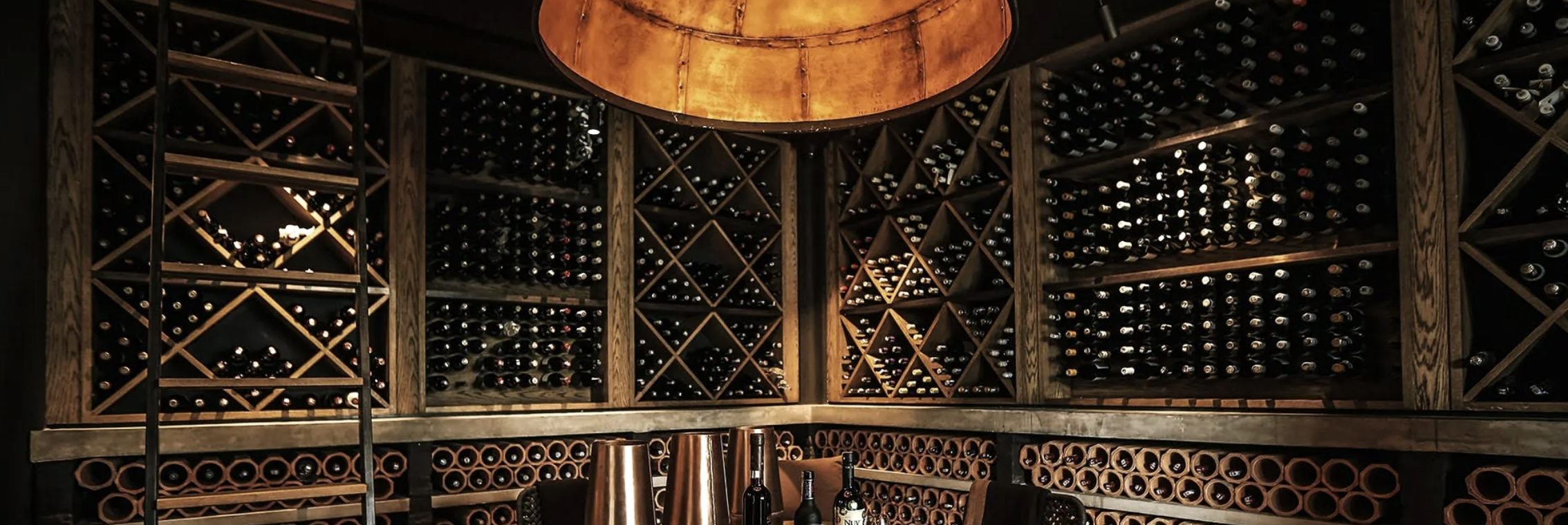
The cellar unit hums away, the room reads 68°F, and the bottles have been creeping warmer for a week. A wine cellar cooling unit that stops cooling is a different animal from a wine fridge — it’s fighting an entire room.
Here’s how to find the fault, and how to tell a unit problem from a room problem.
Cellar already at 68°F? Call 786-377-9387 or book a same-day visit.
First, make sure this is your problem
- A wine fridge or cabinet stopped cooling → that’s a different checklist.
- The unit cools but the walls sweat and labels curl → start with condensation: normal or a problem.
- A dedicated cellar unit — through-wall, ducted, or split — runs but the room stays warm → you’re in the right place.
Quick diagnosis: symptom → likely cause
| What you notice | Most likely cause | Priority |
|---|---|---|
| Runs nonstop, room stays warm | Undersized for the load, dirty coils, or lost refrigerant | High |
| Ice forming on the cooling unit | Airflow restriction or refrigerant imbalance freezing the coil | High |
| Short bursts, then off, room drifts | Short-cycling — thermostat placement or a failing sensor | Medium |
| Water on the floor under the unit | Condensate line blocked or pitched wrong | Medium |
| Room warm only on hot afternoons | Exhaust side dumping into a space that’s hotter than rated | Medium |
| Error code on the display | Sensor, fan, or high-pressure fault — note the code before resetting | High |
| Humidity fine, temperature won’t drop | Cooling capacity fault rather than a room leak | High |
What makes a cellar unit different from a wine cooler?
- It cools a room, not a box. The load includes every wall, the door, the lighting, and each visitor — a cabinet only fights its own insulation.
- It has two sides that both need air. The cold side serves the cellar, the hot side exhausts somewhere else — and that “somewhere” is a design decision that can fail on its own.
- It manages humidity on purpose. Cellar units cool gently to keep the 50–70% range alive; a unit that suddenly dries or floods the room is failing even if the temperature looks fine.
- It comes in three architectures. Through-wall self-contained (the Wine-Mate style common in Vinotemp cellar systems), ducted self-contained, and split systems — each puts the failure points in different places.
- It depends on the room holding up its end. Insulation, a vapor barrier, and a sealed door are part of the cooling system; when they fail, the healthiest unit loses the fight.
Step-by-step: find why the cellar is warm
Work in order — the first steps are free and rule out the most common causes before anything gets opened.
- Read the display before touching anything. Note any error code and the set temperature — codes vanish on reset, and that lost code is half the diagnosis.
- Check both airflows. Feel for cold air moving into the cellar and warm air leaving the exhaust side; a dead fan on either side stalls the whole system.
- Look for ice on the coil. Ice forming on the cooling unit means restricted airflow or a refrigerant imbalance — power down and let it melt fully; never chip it off the coil.
- Clean the filter and coils. Cellar units breathe dust like any HVAC equipment, and a clogged filter alone can freeze the coil within days.
- Check where the heat goes. If the exhaust side dumps into a garage or attic that hits 100°F in August, the unit is rated to fail — measure the exhaust-space temperature on a hot afternoon.
- Test the door and seals. A cellar door without a sweep, or a window of glass without thermal breaks, leaks more load than the unit gains — close the door on a dollar bill at several heights.
- Follow the condensate. Water at the unit’s base means the drain line is blocked or pitched wrong; in a finished cellar that puddle finds the flooring first.
Found ice or a dead fan? Call 786-377-9387 or book a cellar diagnostic.
Is the room the real problem?
Roughly a third of “broken unit” calls end at the room itself. The unit was sized for the cellar as built — and cellars change.
- Insulation gaps. A remodel that opened a wall, or a missing vapor barrier behind the racks, feeds the room heat faster than any residential unit removes it.
- Glass doors and walls. A glass cellar front is a radiator in reverse — beautiful, and worth several hundred watts of extra load the original sizing may not have included.
- Growing collections. Racks added over the years mean more thermal mass and less airflow around the evaporator — the unit now works a bigger job with worse circulation.
- Lighting upgrades. Display lighting left on adds constant heat; halogen fixtures in an older cellar can add more load than a standing adult.
- The neighbor spaces changed. A new water heater or dryer on the other side of the cellar wall raises the load through the wall — the unit didn’t get weaker, the wall got hotter.
The Miami factor
- The exhaust side suffers first. Most cellar units here exhaust into garages or utility rooms that spend six months above their rated ambient — the cellar fails on the hot side, not the cold side.
- Humidity is a double load. Every crack in the vapor barrier pulls in moist air the unit must condense before it can cool — in a Pinecrest estate cellar that’s gallons a week.
- Condensate lines never rest. Year-round humidity keeps drains wet across Miami, and the mold plugs that block them grow in a single summer.
- Storms hit cellars hardest. An outage that a wine cabinet shrugs off costs a whole room its thermal mass — and the restart surge is the classic killer of cellar unit boards.
When to stop DIY and call a technician
Filters, airflow, and the room checks are yours. Past that line starts professional wine cooler repair:
- Ice returns after a full defrost and clean filter — that’s refrigerant imbalance territory, and charging a cellar system takes gauges and the model’s spec sheet.
- The unit runs nonstop with clean coils and a tight room — capacity has been lost inside the sealed system, or the unit was undersized from day one; measurement decides which.
- Error codes come back after resets — repeated sensor or high-pressure faults are the system documenting its own failure; the log matters more than the reset.
- A split system loses cooling — line sets between indoor and outdoor halves are refrigerant work by definition, with recovery equipment required by law.
- Sizing is in question — a load calculation for the room as it exists today is an hour of work that ends years of guessing.
All of it is core wine cellar cooling system repair — diagnosis first, parts second.
Room still climbing? Call 786-377-9387 or book the cellar visit.
A cellar owner’s maintenance rhythm
- Clean or swap the filter quarterly. It’s the cheapest part of the system and the most common cause of a frozen coil.
- Flush the condensate line each season. A cup of water down the pan proves the path before summer volume tests it for you.
- Walk the room twice a year. Check the door sweep, feel for drafts at outlets and rack anchors, and look behind racks for damp spots on the vapor barrier.
- Log the exhaust-space temperature in August. One reading tells you whether the hot side still lives within its rating — before the unit spends a summer proving it doesn’t.
- Keep a cellar log. A weekly line with temperature and humidity turns “it’s been acting weird” into data a technician can actually use.
FAQ: wine cellar cooling unit not cooling
Q: Why is my wine cellar cooling unit running but not cooling?
A: The usual order is dirty filter or coils, a dead fan on one side, lost refrigerant, or a room leaking more heat than the unit was sized for. The free checks — filter, airflow, door seal — rule out half of it in twenty minutes.
Q: Why is ice forming on my wine cellar cooling unit?
A: Restricted airflow or a refrigerant imbalance is driving the coil below freezing. Power down, let it melt completely without chipping, clean the filter — and if ice returns, the refrigerant side needs professional gauges.
Q: How cold should a wine cellar cooling unit keep the room?
A: The traditional target is 55°F with 50–70% humidity. Most units are rated to hold about 30°F below their exhaust-side temperature — which is why the hot side’s location matters as much as the setting.
Q: Why does my cellar get warm only in the afternoon?
A: The exhaust space is exceeding the unit’s rated ambient during peak heat — a garage-exhausting unit in a Miami summer is the textbook case. The unit recovers at night and loses ground by day.
Q: Should I turn the cellar unit off if it’s not cooling?
A: If it’s iced up or short-cycling, yes — running it in that state damages the compressor. Note any error code first; the room’s thermal mass will hold for hours while you arrange the repair.