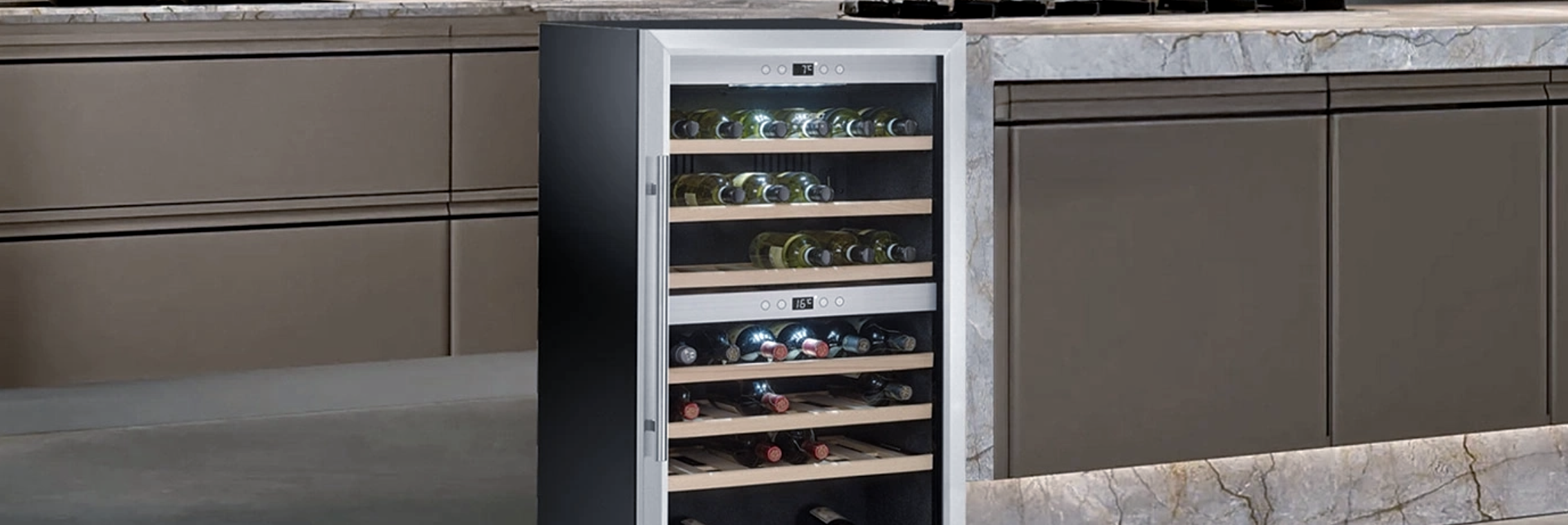
Mist on the glass door. Droplets on the shelves. A damp film that comes back every afternoon. Is that normal for a wine cooler — or the first sign of a fault?
Short answer: some condensation is physics, a lot of condensation is a symptom. Here’s how to tell which one you’re looking at.
Labels peeling, corks damp? Call 786-377-9387 or book a same-day visit.
First, make sure this is your problem
- Standing water inside or a puddle underneath → that’s a leaking wine fridge, a different fault chain.
- Condensation plus warm bottles → cooling is failing; start with why a wine cooler stops cooling.
- Moisture on glass or walls, temperature normal → keep reading.
Quick diagnosis: what you see → what it means
| What you see | What it means | Action |
|---|---|---|
| Light mist inside after door was open a while | Normal — humid air met cold glass | None |
| Mist on the OUTSIDE of the glass | Room humidity meeting a cold door — normal in Miami | Wipe, watch |
| Heavy droplets inside daily, door rarely opened | Door gasket leaking humid air continuously | Fix seal |
| Water film on interior back wall | Normal condensing surface — should drain, not pool | Check drain |
| Moldy smell, damp labels | Humidity stuck above the healthy range | Investigate |
| Fog between the panes of the glass door | Door’s sealed glass unit has failed | Replace door glass |
Why wine coolers sweat at all
Wine storage wants humidity — industry guidance is 50–70% — so a wine cooler doesn’t dry its air the way a kitchen fridge does. Cold glass plus humid air equals mist; that trade-off is by design.
The design assumes two things: the door stays sealed, and the drain carries excess water away. Break either assumption and normal sweat becomes a daily flood.
Three checks that separate normal from fault
- The dollar-bill test. Close the door on a bill at several points; anywhere it slides out freely, humid air is entering nonstop — the door seal guide covers reviving or replacing it.
- The 24-hour wipe test. Dry everything, keep the door shut for a day. Returned droplets with a closed door = the moisture came through a seal, not from an opening.
- The drain check. Moisture should exit through the drain hole at the back-bottom. If droplets pool instead of disappearing, the drain is blocked.
- The label test. Damp or peeling bottle labels mean the interior has held excess humidity for weeks — that’s sustained over-range moisture, not a few door openings.
- The morning pattern. Fog at dawn that clears by mid-morning is the normal daily cycle; fog that sits on the glass all day means moisture is entering faster than the system can carry it out.
Seal failing or drain suspect? Call 786-377-9387 or book a visit online — gasket profiles are model-specific, and we bring the right one.
Built-in columns: the hidden condensation trap
Integrated and panel-ready columns hide their vents inside cabinetry, so moisture problems show up later and cost more.
- Blocked toe-kick venting keeps the door frame colder than designed — the frame itself starts sweating into the cabinetry.
- Actively managed cabinets — Gaggenau’s climate cabinets are the flagship example — control humidity electronically, so a failing door heater or humidity sensor shows up as persistent fog on any such unit: a control-level fix, not a gasket job.
- Panel-ready doors — common on Fisher & Paykel integrated columns — add wood mass that hides early moisture; by the time the panel swells, the gasket has leaked for months.
- Sweating cabinetry around the unit is the built-in’s cry for help: when the surrounding wood itself turns damp, the venting or door heater has failed and the cabinetry is absorbing what the cooler can’t shed.
The Miami factor
Everything above happens faster here. Outside-glass mist that would be a January curiosity elsewhere is an August constant in Key Biscayne, and it’s usually harmless.
The one to respect is inside moisture with a closed door — anywhere in Miami, a leaking gasket pulls in enough water to reach mold territory in weeks, not months.
When to stop DIY and call a technician
Three signs it has moved from physics to wine cooler repair:
- Droplets return daily with the door closed — gasket profiles are model-specific, and a near-fit seal leaks almost as much as a torn one; this needs the right part, not a universal strip.
- Fog sits between the door’s glass panes — the sealed insulated unit has failed, no wiping reaches it, and the door glass gets replaced as an assembly.
- A musty smell persists after cleaning — wet insulation loses R-value, which makes the unit sweat more, which wets it further; that spiral doesn’t stop on its own.
- Mold returns days after every cleaning — the colony lives in the drain path or behind the liner where a wipe can’t reach; it takes disassembly-level cleaning to actually end it.
Seal, door, and humidity-control faults on integrated units are core built-in wine cooler repair scope.
Fog that won’t quit? Call 786-377-9387 or book a seal check.
Moisture habits for a humid climate
- Dry the gasket and door frame monthly — mold colonies start in the fold you can’t see from outside.
- Decide before you open — fewer, shorter door openings matter more here than anywhere inland.
- Don’t chase a colder setpoint than the wine needs — every extra degree of difference is more sweat on the glass.
- Verify the drain each season — condensation is only normal while it has somewhere to go.
- Give the vents room — a warm door frame is the door heater working; a cold, wet one is the same heater failing.
FAQ: condensation inside a wine cooler
Q: Is condensation inside a wine fridge normal?
A: Light mist after door openings is normal — wine coolers run humid by design. Heavy daily droplets with a closed door are not; that’s a seal or drain fault.
Q: Why is my wine cooler sweating on the outside?
A: Room humidity is condensing on the cold glass — common and harmless in humid climates. If the frame or surrounding cabinetry is wet too, check the door heater and venting.
Q: How do I stop condensation on the glass door?
A: Reduce the temperature gap (a degree or two warmer helps), fix any gasket leak, and keep the vents clear so the door heater can do its job. Persistent fog between panes means the glass unit itself failed.
Q: What humidity should a wine fridge be?
A: Industry guidance is 50–70% relative humidity — enough to keep corks supple, not enough to grow mold. Damp labels and musty smells mean you’re above the range.
Q: Does condensation mean my wine fridge is broken?
A: Usually no — it means physics. It becomes a repair question when moisture appears daily with a closed door, pools instead of draining, or brings a moldy smell.