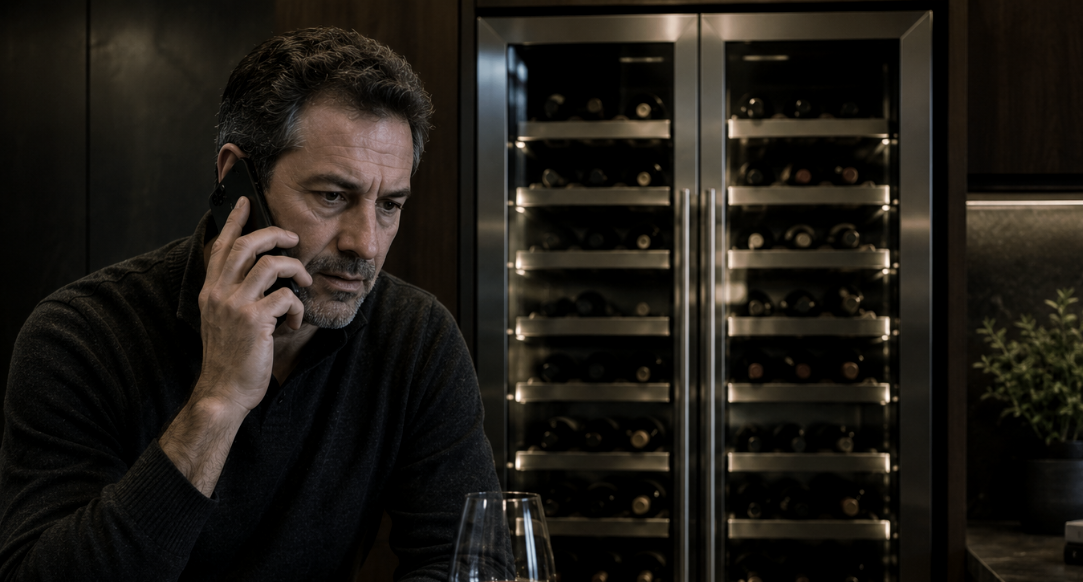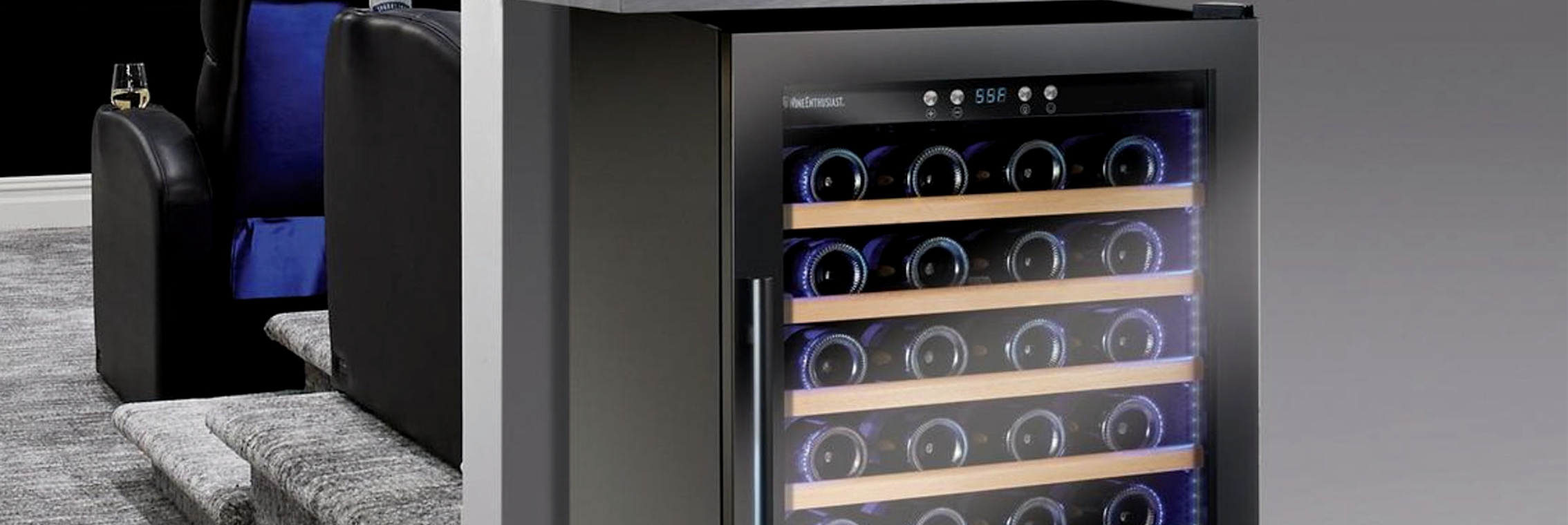
The cooler runs all day, the display says 54°F — and a thermometer inside says 63°F. Or it simply won’t cool below 60 no matter what you set.
A wine cooler that runs but never gets cold enough is losing capacity somewhere. Here’s where to look, in order.
Bottles already warming? Call 786-377-9387 or book a same-day visit.
First, make sure this is your problem
- No cold at all, warm inside → start with why a wine cooler stops cooling.
- Only one zone of a dual-zone unit is warm → see dual-zone: one zone warm.
- Holds temperature fine but the compressor never stops → see runs constantly and never shuts off.
You’re in the right place if the cooler runs and cools — just never enough.
Quick diagnosis: symptom → likely cause
| What you notice | Most likely cause | Priority |
|---|---|---|
| Stalls at 60–63°F, set to 54°F | Blocked ventilation or dirty coils | Medium |
| Display says 54°F, thermometer says warmer | Sensor drift or thermostat calibration | Medium |
| Worse on hot afternoons | Ambient heat exceeding unit rating | Medium |
| Got worse after adding bottles | Overloading blocking interior airflow | Low |
| Glass fogs, cool but never cold | Worn door gasket letting humid air in | Medium |
| Slow decline over months | Weak refrigerant charge | High |
Built-in? Check the ventilation path first
Built-in columns breathe through the front grille — it’s their only airway inside cabinetry. Anything that blocks it starves the condenser.
- Toe-kick grille blocked. Rugs, pet beds, or a renovation that added trim over the vent — the unit slowly overheats and stalls short of temperature.
- Dust mat on the grille. The front intake sits low on most built-ins — Thermador wine columns included — and collects kitchen dust fast; vacuuming it is a two-minute fix.
- Freestanding unit boxed in. A freestanding model slid into a cabinet cutout has no front venting at all — it will never reach setpoint there.
- Custom panels over the vents. After a remodel, a decorative panel or new trim strip often covers part of the slot row — the unit loses capacity the day the carpenter leaves.
- A heat pocket behind the unit. Built-in cavities need the rear void the install manual specifies; without it the cooler inhales its own exhaust and chases its tail all day.
Five more capacity thieves
- Overloading. Bottles stacked against the back wall block the cold-air path; the sensor ends up reading glass, not air. Leave the rack pattern the shelves were designed for.
- Door gasket leaks. The dollar-bill test: close the door on a bill — if it slides out freely, humid room air is feeding heat in around the clock.
- Ambient heat. Every unit has a rated ambient ceiling; on hot afternoons a west-facing kitchen can push past it, and the cooler simply can’t shed heat fast enough.
- Sensor drift. Put a cheap thermometer inside for 24 hours. If it disagrees with the display by 5°F+, the thermistor or control calibration is the fault — common on any brand that shows a rock-steady but wrong number. Some premium lines — Miele columns, for one — even log temperature internally, which speeds up the diagnosis.
- Weak refrigerant charge. A slow leak shows up as months of gradual decline: same settings, warmer bottles. This one is instrument territory, not DIY.
Narrowed it down but need it fixed? Call 786-377-9387 or book a diagnostic online.
The Miami factor
- Kitchens run hotter here. An 82°F kitchen in August steals several degrees of pulldown from any unit rated for 77°F ambient.
- Humidity punishes gaskets. The same worn seal leaks far more heat when the air outside the door carries a Coral Gables summer’s worth of moisture.
- Condensers age faster. Coastal air across Miami corrodes fins, and a corroded condenser sheds less heat every season it goes uncleaned.
- Afternoon sun is a hidden heater. West-facing glass pours solar load onto the cabinet side; the same unit that held 55°F in the old kitchen stalls after a move closer to the window.
- Thermostat setbacks while away. Setting the house AC to 80°F for a trip quietly removes the cooler’s ambient margin — owners come home to warm wine and blame the machine.
When to stop DIY and call a technician
Vents, loading, and the gasket test are safe to check yourself; beyond that starts professional wine cooler repair. Call a pro when:
- It still stalls 5°F+ short with clean coils and clear vents — the remaining suspects are refrigerant charge and control calibration, and both are instrument work, not inspection work.
- The display and a reference thermometer disagree consistently — a drifting sensor will happily “hold” the wrong temperature for months while the wine quietly pays for it.
- Cooling has declined gradually over months — the classic slow-leak signature: a leak never stabilizes, so every month starts a few degrees worse than the last.
- It holds at night but loses ground by day — that’s the ambient-capacity ceiling in action, and a technician can confirm it with a day of data logging instead of guesswork.
- The unit was recently moved or transported on its side — compressor oil migrates into the lines and needs proper settling and assessment before the symptoms mean anything.
Those need gauges and model data — exactly what a built-in wine cooler repair visit brings.
Recognize your unit here? Call 786-377-9387 or book the visit online.
Keep the capacity you paid for
- Vacuum the coils twice a year — a dust mat is invisible from the front and steals degrees long before any part actually fails.
- Re-check clearance after any kitchen change — most stalled built-ins we see follow a renovation, not a breakdown.
- Load to the rack pattern, not to the brim — cold air needs the same paths the shelf designer gave it.
- Run the dollar-bill test on the gasket every season — a seal leak costs cooling long before it shows itself as condensation.
- Compare the display to a cheap thermometer once a month — sensor drift caught early is a recalibration, not a spoiled shelf of wine.
FAQ: wine cooler not cold enough
Q: Why is my wine fridge not cooling below 60 even though it’s set to 54?
A: Something is stealing the last 6 degrees: blocked ventilation, dirty coils, a leaking gasket, ambient heat, or a weak refrigerant charge. Work the list in that order — the first three are free to check.
Q: How long should a wine cooler take to reach temperature?
A: 12–24 hours from a warm start, longer if it’s loaded with warm bottles. Judge it only after a full day at the same setting.
Q: Why does my built-in wine cooler run all day but stay warm?
A: Nine times out of ten it’s the front grille: blocked, dusty, or trimmed over during a renovation. A built-in that can’t exhaust through the front has nowhere else to send heat.
Q: Can too many bottles keep a wine fridge from getting cold?
A: Yes — bottles pressed against the back wall block the cold-air path and the sensor. Keep to the shelf layout the rack was designed for.
Q: Why is my wine cooler colder at the bottom than the top?
A: Cold air sinks, so a mild gradient is normal. A large gap — cold bottom, warm top — usually means the interior circulation fan has stopped.