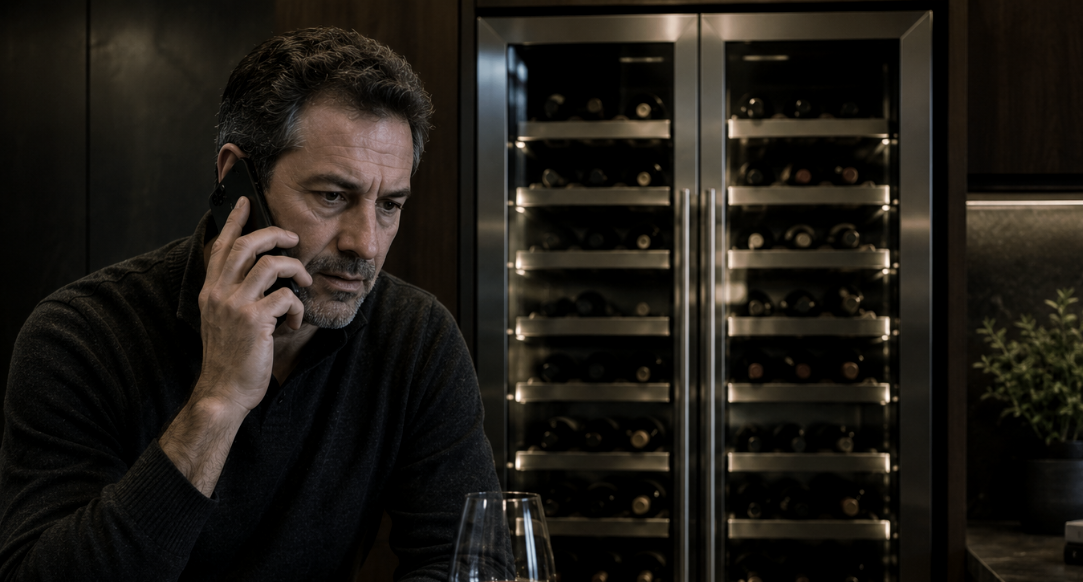
Wine refrigeration problems in Miami Beach rarely begin with complete cooling failure.
Most systems continue running while humidity balance, cooling recovery, and storage stability slowly become less reliable under coastal conditions.
We provide professional Wine Cooler Repair in Miami Beach focused on restoring stable wine storage conditions, accurate cooling behavior, and dependable long-term preservation performance.
Why Miami Beach Wine Refrigeration Behaves Differently
Miami Beach creates heavier refrigeration stress than most inland residential environments.
Ocean humidity, salt-heavy air, glass-heavy condo construction, and long daytime thermal exposure place continuous pressure on wine refrigeration systems throughout the year.
This is especially common in condo towers along Collins Avenue, Ocean Drive, and other beachfront areas where cooling systems operate under constant environmental load.
How Miami Beach Conditions Affect Wine Coolers Over Time
| Environmental Factor | How It Affects Wine Refrigeration | Impact Level |
|---|---|---|
| Coastal humidity | Increases internal moisture load and condensation risk | High |
| Salt-air exposure | Accelerates corrosion on electrical components and metal surfaces | High |
| High-rise heat retention | Raises ambient temperature and increases cooling workload | High |
| Glass-heavy interiors | Adds daytime thermal gain and slows recovery cycles | High |
| Enclosed cabinetry | Restricts airflow and reduces ventilation efficiency | Medium |
| Long compressor runtime | Increases wear and reduces long-term cooling stability | High |
| Unstable daytime recovery | Causes temperature drift during peak heat hours | High |
| Limited ventilation | Reduces condenser efficiency and cooling performance | High |
Many systems in Miami Beach continue cooling while:
- humidity becomes less predictable
- cooling recovery slows during the afternoon
- bottle temperatures drift slightly out of balance
This often happens before any obvious failure appears.
The Kind of Properties This Page Is Really About
Wine refrigeration service in Miami Beach often involves environments where wine storage is built directly into the lifestyle of the property.
That commonly includes:
- luxury condos
- waterfront residences
- penthouses
- designer kitchens
- custom bar installations
- wine rooms
- entertainment-focused homes
- hospitality suites
- secondary refrigeration systems
These environments usually notice performance drift early because preservation conditions are expected to remain stable consistently.
Common Miami Beach ZIP Codes & Service Areas
Miami Beach routing commonly includes:
- 33139
- 33140
- 33141
- 33154
Coastal & Luxury Areas
- Miami Beach
- Fisher Island
- Bal Harbour
- Surfside
- Sunny Isles
Condo & High-Rise Areas
- South Beach
- Mid-Beach
- North Beach
- South of Fifth (SoFi)
- Edgewater
- Brickell routes where scheduling aligns
Nearby Residential Areas
- Bay Harbor Islands
- Key Biscayne
- Miami Shores
If the property sits slightly outside one of these ZIPs, routing overlap is often still possible depending on scheduling conditions.
What We Repair in Miami Beach
We provide repair and diagnostics across the major wine refrigeration categories commonly used in Miami Beach homes, collector spaces, condos, and hospitality environments.
Wine Refrigeration Services
- Commercial Wine Cooler Repair
- Wine Cellar Cooling System Repair
- Built-In Wine Cooler Repair
- Single & Dual Zone Wine Cooler Repair
- Thermoelectric & Compressor Wine Cooler Repair
- Freestanding Wine Cabinet Repair
- Oversized Wine Cooler Repair
Additional Refrigeration Support
- Beverage Cooler Repair
- Ice Maker Repair
- Undercounter Refrigeration Repair
- Luxury Refrigeration Diagnostics
What Homeowners Usually Notice First
Most Miami Beach wine refrigeration problems begin as environmental instability rather than complete shutdown.
| What Homeowners Notice in Miami Beach Properties | What It Often Indicates | Priority |
|---|---|---|
| Wine coolers struggle more during hot Miami Beach afternoons | Environmental heat-load stress | High |
| Condensation appears on glass in beachfront condos | Humidity instability | Medium |
| Bottle temperatures drift in high-rise condo installations | Sensor or circulation imbalance | High |
| Wine cellars warm gradually during sunny daytime exposure | Thermal-load imbalance | High |
| Cooling recovery slows after gatherings in humid environments | Recovery-cycle weakness | Medium |
| Refrigeration becomes louder inside open-layout condos | Compressor or fan strain | Medium |
| Display looks stable while wine feels warmer during daytime heat | Calibration or airflow drift | High |
| Systems cool better overnight than during active daytime conditions | Environmental recovery stress | High |
In Miami Beach properties, homeowners usually notice subtle changes in cooling behavior before the system stops working completely.
Why Coastal Conditions Matter
Wine refrigeration systems near the beach operate under heavier environmental pressure almost continuously.
Salt exposure may accelerate corrosion around electrical terminals, fans, exposed metal surfaces, and control connections. Humidity increases condensation stress, while glass-heavy architecture creates stronger daytime thermal load.
That affects:
- cooling recovery timing
- compressor workload
- humidity balance
- control-board stability
- condenser efficiency
- electrical lifespan
- long-cycle performance
- airflow consistency
This becomes more noticeable in luxury condo installations where airflow margins are already limited.
Real Wine Refrigeration Problems We Repair
Wine Cooler Runs Constantly During Daytime Heat
Many systems appear stable overnight, then struggle once daytime environmental load increases.
The cooler may still reach temperature eventually, but recovery slows and runtime becomes excessive.
Common causes include:
- condenser stress
- restricted ventilation
- salt-related airflow buildup
- declining compressor recovery
- environmental heat load
- circulation inefficiency
The issue is not simply whether the system cools.
The issue is whether it can maintain stable preservation conditions during real Miami Beach operating conditions.
Condensation Around the Glass or Cabinet
Condensation problems are extremely common in coastal luxury environments.
Glass doors and surrounding cabinetry often react first when humidity balance becomes unstable.
Common causes include:
- humidity imbalance
- repeated warm-air intrusion
- unstable recovery cycles
- weak door sealing
- airflow inconsistency
- environmental moisture pressure
The goal is not simply drying the glass temporarily.
The goal is restoring stable environmental behavior throughout normal daily operation.
Wine Cellar Feels Stable at Night but Drifts During the Day
This is one of the most common Miami Beach wine cellar complaints.
The cellar may appear stable overnight, then gradually lose consistency once daytime thermal load increases.
Common causes include:
- solar heat gain
- glass exposure
- humidity infiltration
- condenser-side overload
- insulation weakness
- long-cycle cooling fatigue
Many cellar systems continue operating while preservation stability slowly becomes less controlled during active daytime conditions.
Display Looks Correct but Wine Feels Warm
This usually means the refrigeration environment is becoming less accurate than the controller suggests.
Common causes include:
- sensor drift
- calibration mismatch
- delayed recovery timing
- unstable circulation
- bottle-load imbalance
- airflow stratification
The display alone does not confirm proper wine preservation conditions.
Wine Refrigeration Sounds Louder in High-Rise Condos
Modern condo layouts often make refrigeration stress more noticeable acoustically.
Sometimes the sound itself is minor.
The real concern is the operating condition creating the noise.
Common causes include:
- extended compressor runtime
- vibration transfer into cabinetry
- circulation fan imbalance
- restricted airflow
- uneven installation surfaces
- condenser stress
Wine refrigeration should sound stable and controlled during normal operation — not strained throughout the day.
Why Timing & Access Matter in Miami Beach
Miami Beach routing involves more than standard residential scheduling.
High-rise access procedures, valet coordination, freight elevators, service windows, loading restrictions, and security desks all affect how appointments are planned.
Helpful details when scheduling include:
- condo or tower name
- elevator requirements
- parking instructions
- service-entry details
- gate or access notes
- appliance category
- built-in vs freestanding setup
- wine cellar size where applicable
Correct routing helps keep arrival windows realistic and prevents unnecessary delays.
Why Homeowners Choose Us for Wine Cooler Repair in Miami Beach
Wine refrigeration near the coast is rarely just about replacing one failed component.
The system has to be evaluated against real environmental conditions — humidity, salt exposure, thermal load, airflow behavior, and luxury-installation constraints.
That means:
- diagnosis before parts replacement
- environmental-load evaluation
- careful handling around luxury interiors
- experience with premium wine refrigeration
- wine cellar climate-system awareness
- cooling recovery verification
- preservation stability testing before completion
- clear communication throughout the visit
Wine storage should remain quietly dependable in the background — not become something constantly monitored throughout the day.
FAQ — Wine Cooler Repair in Miami Beach, FL
Q: Why do wine coolers fail faster in Miami Beach condos?
A: Coastal humidity, salt exposure, thermal load, and long runtime cycles place additional stress on refrigeration systems near the ocean.
Q: Does ocean air affect refrigeration systems over time?
A: Yes. Salt-heavy air may accelerate corrosion around fans, terminals, electrical connections, and exposed metal surfaces.
Q: Why is servicing wine coolers more complex in high-rise buildings?
A: High-rise condos often involve tighter airflow conditions, luxury built-in installations, access restrictions, and freight-elevator coordination.
Q: Why does my wine cooler cool better at night?
A: Environmental temperatures and thermal load usually decrease overnight, allowing the system to recover more efficiently.
Q: Is condensation normal in Miami Beach properties?
A: Light moisture may appear occasionally, but repeated condensation usually indicates humidity instability or weak recovery behavior.
Q: Why does the display look normal while the wine feels warm?
A: Sensor readings may no longer reflect real bottle conditions if calibration or airflow behavior has started drifting.
Q: Can coastal humidity damage wine cellar systems?
A: Over time, humidity and salt exposure may increase wear on electrical and cooling-system components.
Q: Are premium wine refrigeration repairs usually worth it?
A: Often yes, especially for built-in systems, wine rooms, luxury refrigeration platforms, and collector-grade storage environments.