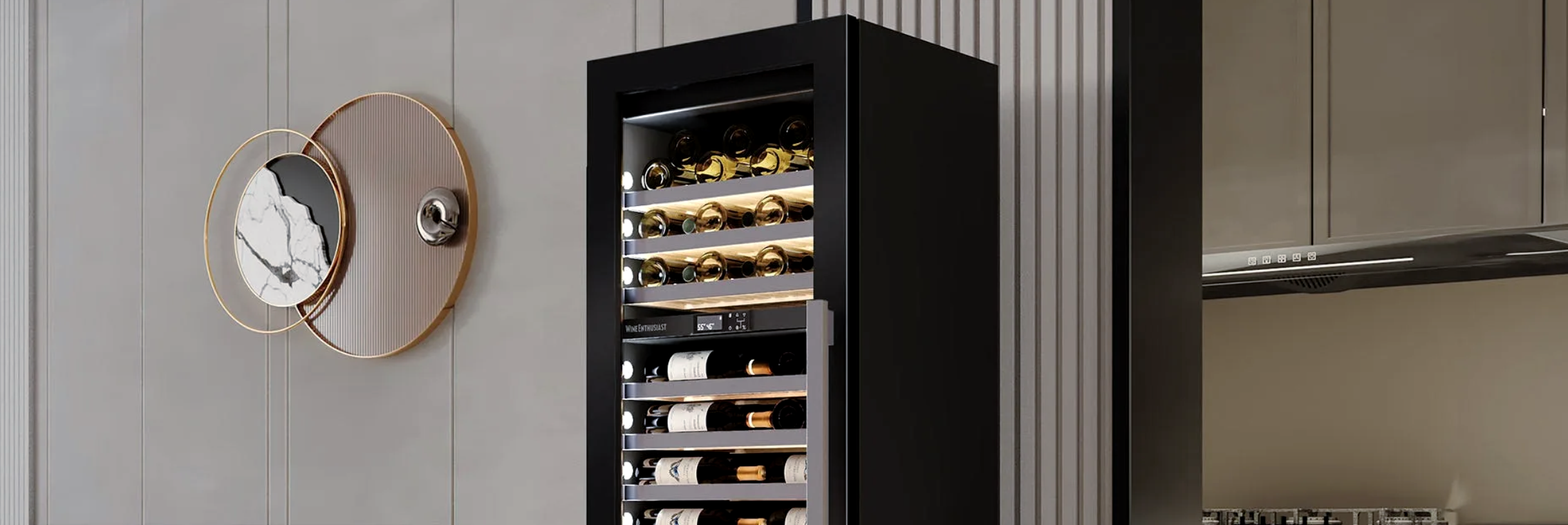
“How much will this cost me?” is the first question every wine cooler owner asks — and the honest answer is: it depends on which part failed, not on how bad the symptom looks.
Here’s what actually moves the number, from the cheap fixes that look scary to the expensive ones that start quietly.
Want a real number for your unit? Call 786-377-9387 or book a diagnostic visit — the estimate comes before any work.
First, make sure this is your problem
- Deciding whether to fix it at all → see repair or replace.
- Unit dead right now and you want it working → start with why a wine cooler stops cooling.
- You want to understand what a repair will cost and why → you’re in the right place.
What moves the price: symptom → cost tier
| What’s wrong | Typical fix | Cost tier |
|---|---|---|
| Clicking, won’t start | Start relay or capacitor | Low |
| Warm top shelf, fan silent | Circulation fan motor | Low–mid |
| Wrong temperature readings | Thermistor / sensor | Low–mid |
| Fog, frost, door issues | Gasket or hinge work | Low–mid |
| Dead display, no response | Control board | Mid |
| Runs forever, cools less monthly | Refrigerant leak repair | Mid–high |
| Compressor itself failed | Compressor replacement | High |
Why can’t anyone quote a price over the phone?
- Symptoms lie about severity. A dead-silent cooler might need a relay; a quietly humming one might need a compressor — the scary one is often the cheap one.
- The same symptom has five prices. “Not cooling” spans everything from a tripped GFCI to a sealed-system job.
- Parts are model-specific. A gasket for a compact freestander and one for a panel-ready column are different animals with different price tags.
- That’s what diagnosis is for. Amp draw, pressures, and sensor readings turn “somewhere between cheap and painful” into one number — before any repair begins.
The cost tiers, honestly explained
- Low: electrical small parts. Relays, capacitors, thermostats — minutes to swap once diagnosis names them.
- Low–mid: fans, sensors, gaskets. Truck-stock parts and an hour of careful hands.
- Mid: control boards. The part costs real money; the diagnosis that confirms it’s truly the board is what saves you from buying one needlessly.
- Mid–high: refrigerant work. Finding and sealing a leak plus a proper recharge — gauge work with recovery equipment, priced accordingly.
- High: compressor replacement. The one tier where the replace question genuinely competes — age and unit class decide it.
- The special case: small thermoelectric units. A Peltier module on a countertop cooler can approach the unit’s own price — an honest shop says so at diagnosis.
Skip the guessing entirely: call 786-377-9387 or book the diagnostic — the visit produces the number.
What makes a repair cost more than it should?
- Waiting. A month of clicking turns a relay ticket into a compressor quote — hot starts bill you retroactively.
- Parts roulette. Two guessed parts often cost more than one diagnosis — and the fault is still there.
- Universal “fits-most” parts. The near-fit gasket that still leaks means paying twice for one problem.
- Running a faulty unit “until the visit.” An iced evaporator or hot compressor keeps damaging itself every hour it runs.
- Access surprises. A built-in column boxed in by later renovation adds cabinetry time before repair time — worth mentioning when you book.
The Miami factor in the bill
- Salt shortens part lives. Coastal units across Miami replace fans and condensers years earlier — same repairs, earlier calendar.
- Storm season stacks the queue. After every outage wave, surge-killed boards flood the schedule — pre-season checkups beat post-storm waits.
- High-rise access is real time. Loading docks and service elevators in Sunny Isles Beach towers add logistics a house call doesn’t have.
- Heat compresses decision windows. A failing unit here cooks wine in days, not weeks — the cost of waiting includes the bottles.
When is the diagnostic itself the best money spent?
Whenever the symptom has more than one possible cause — which is nearly always. That’s the core of professional wine cooler repair:
- It names the fault before money moves — one number, one part, one decision.
- It catches the second problem — the leak behind the frost, the seal behind the runtime.
- It produces the honest “don’t repair this” verdict — the cheapest expensive advice there is.
- It prices complex units correctly — from countertop boxes to built-in columns and commercial merchandisers.
One visit, one number: call 786-377-9387 or book online.
Keep future bills small
- Coils twice a year — the cheapest line item in this whole article.
- Act in the first week of any new symptom — every tier on the table above starts as the tier below it.
- Surge protection before storm season — boards are the most avoidable expensive part.
- Keep a one-line log — “started clicking on the 3rd” shortens diagnosis and the bill with it.
- Fix seals when they fail the bill test — gaskets are the cheap part that protects every expensive one.
FAQ: wine cooler repair cost
Q: How much does it cost to repair a wine cooler?
A: It spans from a small electrical part to a compressor job — the part that failed sets the price, not the symptom. A diagnostic visit turns the range into one number before any work starts.
Q: Why won’t repair companies quote a price over the phone?
A: Because the same symptom has five possible causes at five different prices. Anyone quoting “not cooling” sight-unseen is guessing with your money.
Q: What’s the most expensive wine cooler repair?
A: Compressor replacement, with refrigerant leak work close behind. Both usually announce themselves months earlier as cheap symptoms — clicking, longer runtimes, slow decline.
Q: Is fixing an old wine cooler worth the money?
A: Depends on age, unit class, and which tier the fault lands in — the full framework is in repair or replace.
Q: Does the diagnostic fee go toward the repair?
A: Ask when you book — policies differ by shop and job. What matters is that the estimate lands before the repair, so the decision is always yours.