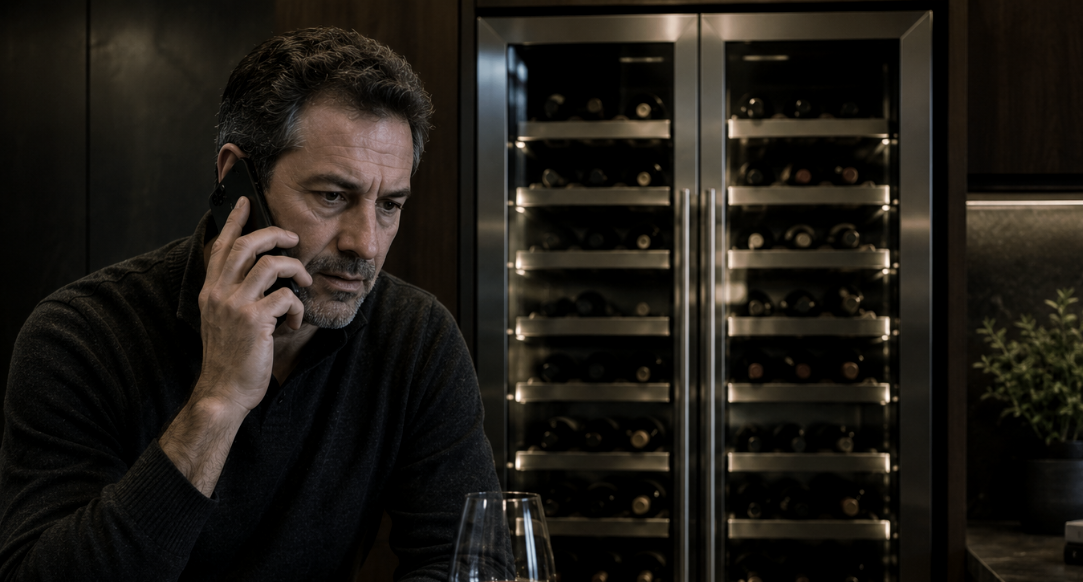
Wine Cooler Running — But Storage Conditions Feel Different?
If your KitchenAid wine cooler still powers on but bottles are less chilled, temperatures fluctuate during the day, or cooling struggles after frequent use, the system may already be losing storage consistency.
Miami Wine Cooler Service provides professional KitchenAid wine cooler repair in Miami focused on built-in wine refrigeration, dual-zone cooling systems, and stable everyday wine storage performance.
Common Signs a KitchenAid Wine Cooler Needs Service
- bottles not staying cold enough
- white wines less chilled than before
- cooling taking longer after openings
- temperatures changing between shelves
- condensation returning inside the cabinet
- cabinet running longer during afternoons
- fan noise becoming more noticeable
- controls responding inconsistently
- one zone warmer than another
- wine quality changing during storage
Many KitchenAid wine coolers continue operating while cooling performance slowly becomes less reliable underneath.
Why KitchenAid Wine Coolers Are Used Differently
KitchenAid wine refrigeration is commonly installed in active family kitchens, entertaining spaces, and open-concept homes where the system experiences constant daily use.
Many KitchenAid systems focus heavily on:
- under-counter built-in installation
- dual-zone wine cooling
- compact luxury storage
- quiet operation for open kitchens
- stainless steel integrated designs
- touchscreen temperature controls
- daily-access convenience
Unlike long-term collector-focused wine systems, many KitchenAid wine coolers are designed around practical everyday use and frequent bottle access.
That means airflow recovery, thermal behavior, and cooling consistency become especially important in busy Miami kitchens.
KitchenAid Wine Refrigeration We Service
Under-Counter Wine Coolers
KitchenAid under-counter wine systems are common in residential kitchens, bars, and entertainment spaces throughout Miami.
Common complaints include:
- uneven shelf temperatures
- cooling weakening during heavy use
- slower recovery after openings
- inconsistent bottle temperatures
Dual-Zone Wine Storage Systems
KitchenAid dual-zone wine coolers rely on balanced airflow and coordinated temperature management between storage sections.
| What You Notice | What It Usually Means |
|---|---|
| one zone warmer | airflow imbalance |
| bottles cooling unevenly | sensor instability |
| slower pull-down | thermal recovery stress |
| unstable temperatures | ventilation restriction |
Built-In Wine Refrigeration Platforms
We also service many KitchenAid wine refrigeration systems, including:
- built-in wine coolers
- under-counter wine storage systems
- dual-zone wine refrigerators
- integrated wine cabinets
- compact entertaining refrigeration systems
If the model number is unavailable, a photo of the control panel or model tag usually helps identify the platform correctly.
Why Miami Heat Affects KitchenAid Wine Systems Faster
Miami kitchens place much heavier thermal demand on built-in wine refrigeration systems.
Because KitchenAid wine coolers are often used frequently throughout the day, cooling recovery cycles become especially important during Miami heat and humidity.
What Homeowners Usually Notice
- bottles warmer after entertaining
- cooling struggling during afternoons
- temperatures changing later in the day
- condensation returning repeatedly
- cabinet staying on much longer than before
These problems often get worse quickly in Miami heat and humidity.
When Cooling Stops Feeling Consistent
KitchenAid wine systems are designed for dependable daily storage behavior.
When airflow or recovery performance weakens, the cabinet may still cool — but no longer maintain stable storage conditions throughout the day.
Common Signs
- top shelves warmer than lower shelves
- wines taking longer to chill
- one side recovering slower
- uneven bottle temperatures
- cooling changing after frequent openings
Common Causes
| Failure Path | Typical Result |
|---|---|
| circulation airflow restriction | uneven shelf cooling |
| condenser ventilation stress | slower recovery |
| evaporator airflow imbalance | unstable temperatures |
| sensor drift | inaccurate thermal behavior |
Why It Matters
Wine quality and serving consistency can slowly decline without becoming immediately obvious.
Proper Repair Should Restore
- balanced shelf temperatures
- stable cooling recovery
- reliable daily wine storage
- quieter airflow operation
KitchenAid wine cooler repair in Miami often involves correcting airflow and thermal recovery instability before storage performance declines further.
Why KitchenAid Wine Coolers Run Longer Over Time
Long runtime is one of the earliest signs of declining cooling efficiency.
The system may still cool while recovery performance slowly weakens underneath.
Common Signs
- compressor staying on longer
- warmer cabinet temperatures during afternoons
- slower cooling after openings
- louder operation than before
- bottles taking longer to reach serving temperature
Common Causes
- restricted condenser airflow
- humidity infiltration
- built-in ventilation stress
- thermal recovery instability
- circulation fan weakening
Proper Repair Should Restore
- stable compressor cycling
- faster cooling recovery
- reduced thermal strain
- more reliable storage conditions
Control Problems, Sensor Drift & Electronic Faults
Modern KitchenAid wine refrigeration relies heavily on electronic temperature coordination and sensor management.
Common Fault Areas
- thermistor instability
- touchscreen-response issues
- fan communication faults
- intermittent display behavior
- electronic control drift
- board communication instability
What Homeowners Often Notice
- controls reacting slower than before
- flashing temperature displays
- unstable wine-zone temperatures
- alarms returning repeatedly
- inconsistent cooling behavior
Small electronic instability can quickly affect overall storage consistency in frequently used wine systems.
Why Built-In Installation Conditions Matter
| Installation Condition | Why It Affects Wine Cooling |
|---|---|
| tight cabinetry | restricts heat removal |
| weak airflow spacing | increases recovery stress |
| Miami humidity | increases moisture load |
| direct sunlight exposure | destabilizes temperatures |
| frequent daily use | increases thermal demand |
Built-in wine systems have much tighter airflow margins than standard beverage refrigerators.
What Proper KitchenAid Wine Cooler Repair Should Verify
| System Area | What Should Be Confirmed |
|---|---|
| wine zones | stable temperature separation |
| airflow | even shelf circulation |
| cooling recovery | normal pull-down operation |
| humidity behavior | stable cabinet conditions |
| controls | no repeat instability |
| compressor cycling | stable runtime behavior |
A KitchenAid wine cooler should not simply cool again — it should maintain stable everyday wine storage conditions again.
Why Homeowners Choose Miami Wine Cooler Service
- experience with built-in wine refrigeration systems
- understanding of Miami heat and humidity conditions
- integrated airflow and cabinetry awareness
- diagnosis before part replacement
- clean in-home workmanship
- cooling-performance verification before completion
FAQ — KitchenAid Wine Cooler Repair in Miami
Q: My KitchenAid wine cooler still runs. Why are bottles warmer than before?
A: This usually happens when airflow circulation or cooling recovery starts weakening inside the cabinet, even though the system still powers on normally.
Q: Why does the cabinet feel hotter during Miami afternoons?
A: Built-in wine systems work much harder in Miami heat and humidity, especially in tight kitchen cabinetry with limited ventilation airflow.
Q: Is condensation inside the wine cooler normal?
A: Occasional light moisture can happen after frequent openings, but repeated condensation usually points to humidity imbalance, sealing problems, or unstable airflow behavior.
Q: Why do temperatures change between shelves?
A: Most often because airflow is no longer distributing cooling evenly throughout the cabinet or between wine zones.
Q: My controls lag or react slowly. Is that important?
A: Yes. Slow control response can indicate sensor communication instability or developing electronic-control faults affecting temperature management.
Q: Why is the compressor staying on longer than before?
A: Long runtime usually means the cooler is struggling to maintain stable storage temperatures because recovery efficiency has weakened.
Q: Can built-in installation affect wine cooler performance?
A: Absolutely. KitchenAid wine systems rely heavily on proper airflow spacing around the cabinet. Restricted ventilation often causes unstable cooling behavior and longer recovery cycles.
Miami Areas We Serve
We provide built-in wine cooler repair throughout Miami and surrounding luxury residential and hospitality areas.